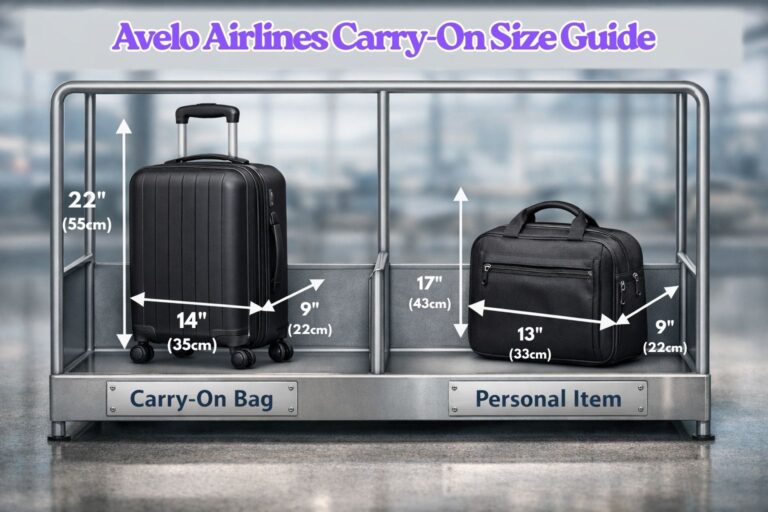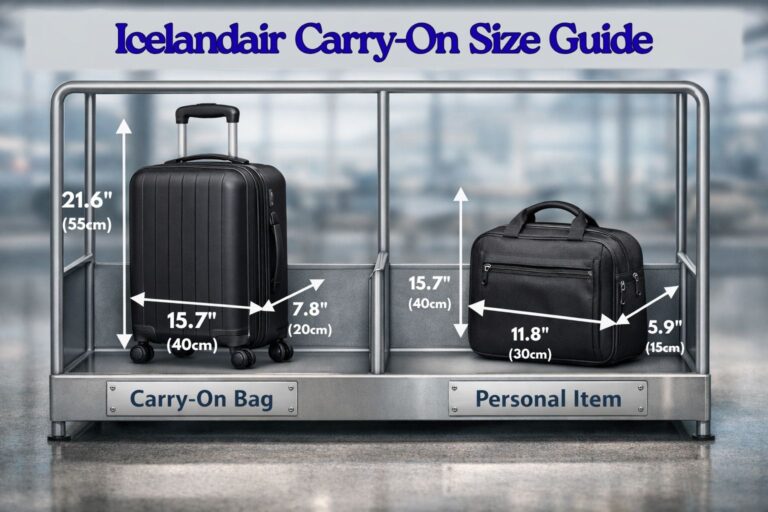
Will My Bag Fit as a Carry-On? Size & Rules Guide
You’ve packed your bag, zipped it up, and now you’re wondering—will it actually fit as a carry-on? That last-minute doubt is common, especially when different airlines have different rules. Carry-on size, luggage dimensions, and cabin baggage rules can vary just enough to cause confusion.
The good news is you don’t need to guess. While there’s no single rule that works for every airline, there are clear size patterns and simple ways to check if your bag will be accepted.
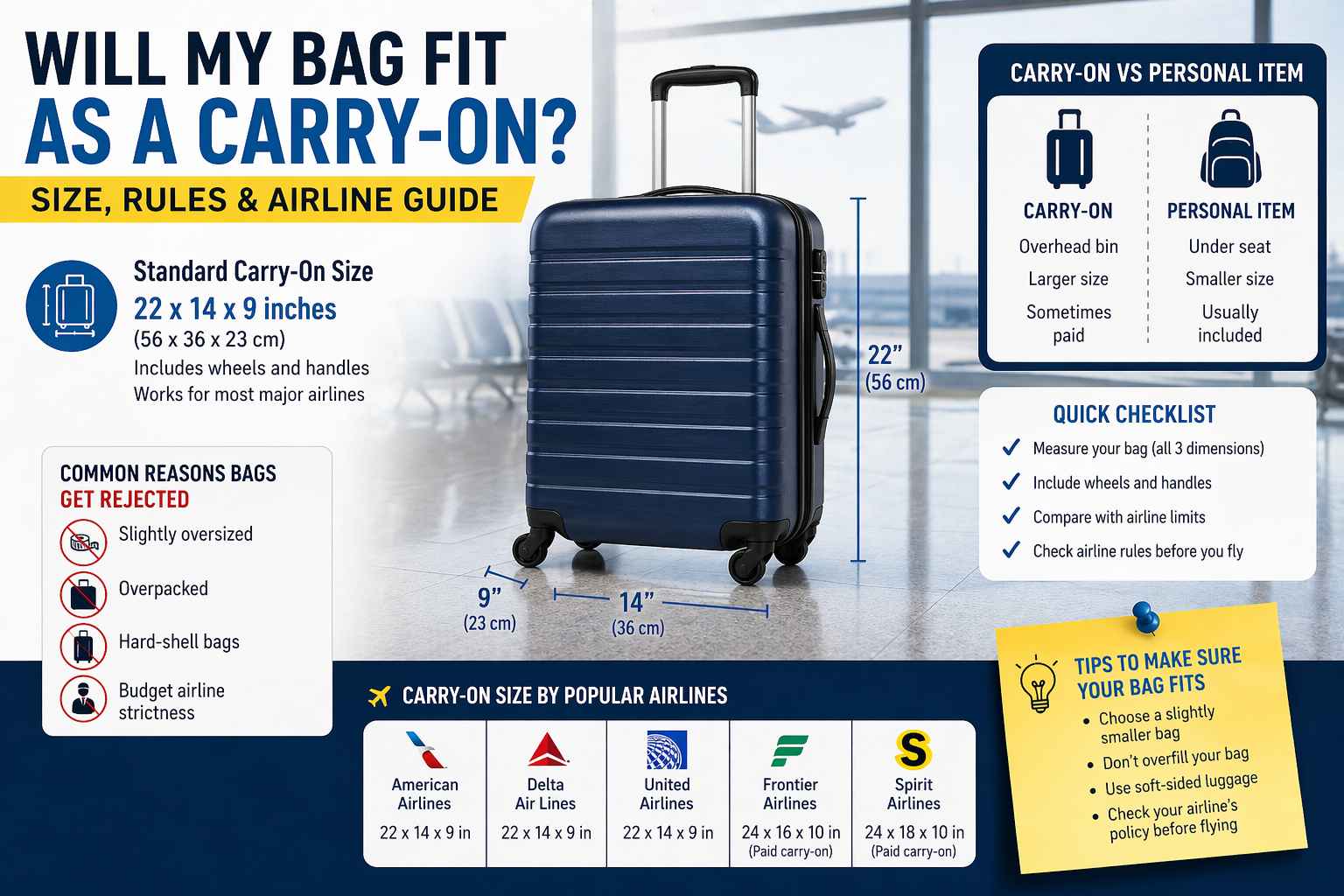
Standard Carry-On Size
For most airlines, the typical carry-on size is:
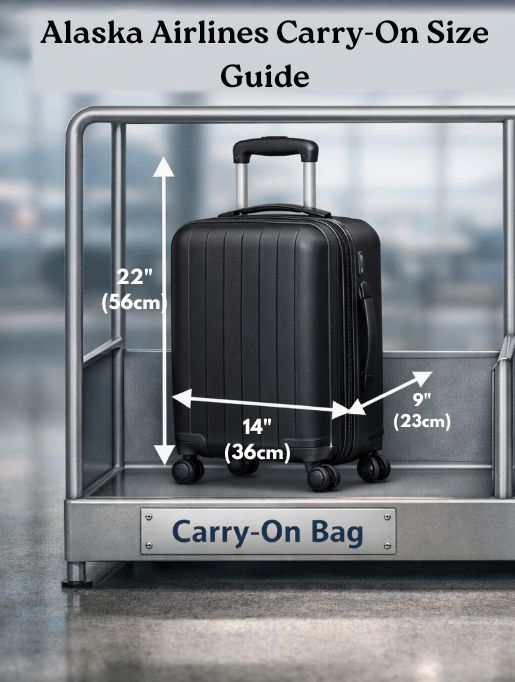
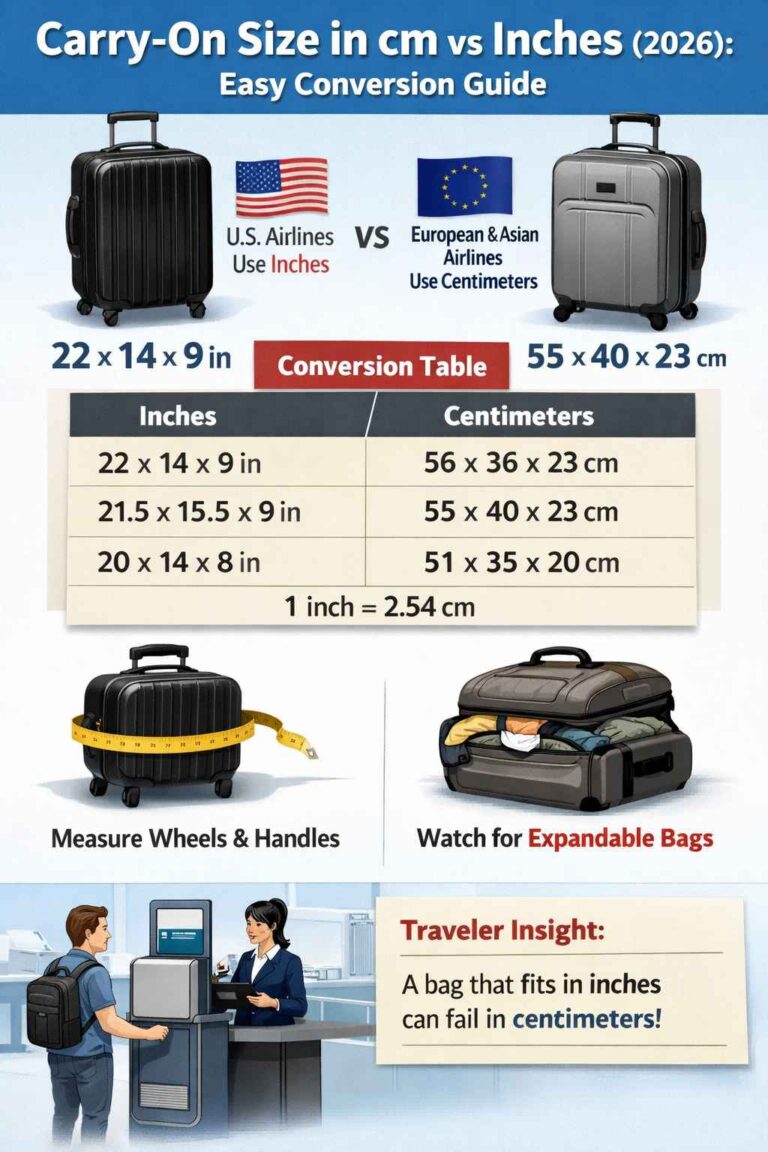
22 x 14 x 9 inches (56 x 36 x 23 cm)
This includes:
- Wheels
- Handles
- External pockets
Carry-On Size by Popular Airlines
| Airline | Carry-On Size (cm) | Carry-On Size (inches) | Weight Limit | Allowance |
|---|---|---|---|---|
| American Airlines | 56 x 36 x 23 | 22 x 14 x 9 | Not specified | 1 bag |
| Delta Airlines | 56 x 35 x 23 | 22 x 14 x 9 | Not specified | 1 bag |
| Southwest Airlines | 61 x 41 x 25 | 24 x 16 x 10 | Not specified | 1 bag |
| United Airlines | 56 x 35 x 23 | 22 x 14 x 9 | Not specified | 1 bag |
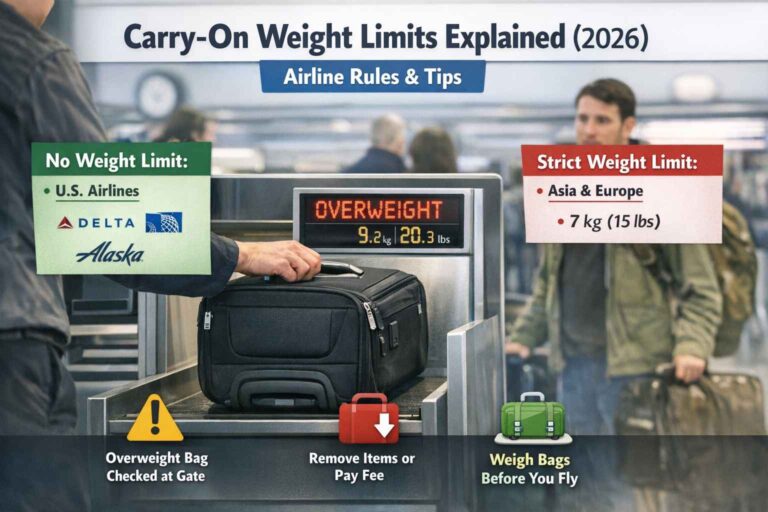
| Frontier Airlines | 61 x 41 x 25 | 24 x 16 x 10 | 15.8 kg (35 lb) | 1 bag (paid) |
| JetBlue Airlines | 55.88 x 35.56 x 22.86 | 22 x 14 x 9 | Not specified | 1 bag |
| Spirit Airlines | 56 x 46 x 25 | 22 x 18 x 10 | Not specified | 1 bag (fare-based) |
| Alaska Airlines | 56 x 36 x 23 | 22 x 14 x 9 | Not specified | 1 bag |
| Allegiant Airlines | 55 x 40 x 25 | 22 x 16 x 10 | Not specified | 1 bag (paid) |
| Air Canada | 55 x 40 x 23 | 21.5 x 15.5 x 9 | Not specified | 1 bag |
| British Airways | 56 x 45 x 25 | 22 x 18 x 10 | Not specified | 1 bag |
| Lufthansa | 55 x 40 x 23 cm | 21.6 x 15.7 x 9 in | 8 kg | 1–2 bags (depends on class) |
These examples show that while many airlines follow a similar structure, budget carriers often allow slightly larger sizes but charge separately.
How to Check If Your Bag Will Fit
You don’t need special tools—just a quick check at home:
- Measure your bag’s height, width, and depth
- Include wheels, handles, and pockets
- Compare your measurements with your airline’s limits
If your bag is even slightly larger than allowed, it may not fit in the cabin.
What Counts as a Carry-On Bag?
A carry-on bag is the larger piece of cabin baggage that goes in the overhead bin.
It’s different from a personal item, which sits under the seat.
Carry-on bags typically:
- Follow strict size limits
- Are limited to one per passenger (on most airlines)
- May be included or paid depending on airline and fare
Understanding this difference helps you pack smarter and use both allowances effectively.
Common Reasons Bags Get Rejected
Even if your bag seems close to the limit, a few things can cause issues:
- Slightly oversized dimensions
- Overpacked bags that expand outward
- Hard-shell suitcases that don’t compress
- Strict enforcement by budget airlines
Sometimes the difference is just a few centimeters—but that’s enough for a bag to be flagged.
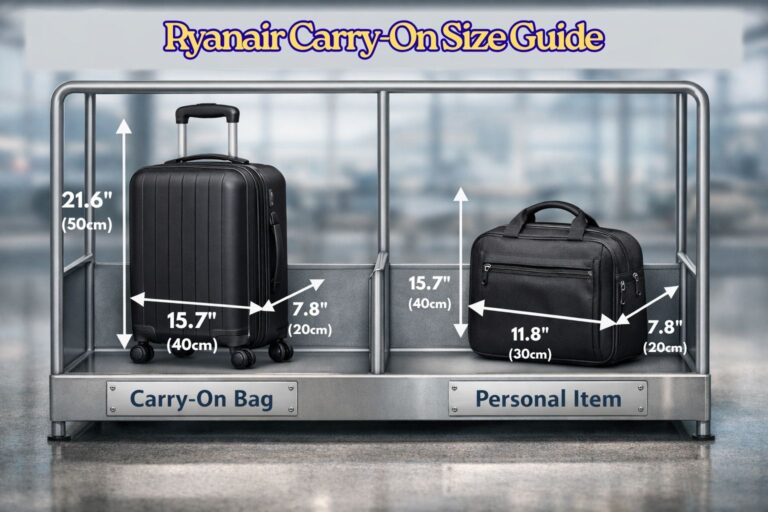
Airline Carry-On Sizers (How They Work)
At the airport, you’ll often see a metal frame near the check-in or boarding gate. This is one of the easiest ways to check will my bag fit as a carry-on before you board.
This is the carry-on sizer.
- Your bag must fit completely inside it
- If it doesn’t fit, it won’t be accepted as cabin baggage
- Staff may ask you to test your bag before boarding
This is one of the most common ways airlines enforce size restrictions.
Does Carry-On Size Change by Airline?
Yes, but not dramatically.
Most airlines stick close to similar luggage dimensions, especially full-service carriers.
However:
- Budget airlines may be stricter or charge for carry-ons
- Some international airlines may have different cabin baggage size rules
- Smaller aircraft may have limited overhead space
So while the general size stays consistent, enforcement and policies can vary.
Tips to Make Sure Your Bag Fits
A few simple choices can make a big difference:
- Pick a bag slightly smaller than the size limit
- Avoid packing it to full capacity
- Use soft-sided luggage when possible
- Double-check your airline’s policy before flying
These small adjustments can help your bag fit more easily in cabin storage.
Check Your Airline’s Carry-On Rules
For exact details, check your airline’s official rules:
- American Airlines – standard carry-on size with clear guidelines
- Delta Air Lines – similar size with flexible weight rules
- United Airlines – includes Basic Economy restrictions
- Frontier Airlines – carry-on is paid and strictly checked
- Spirit Airlines – budget model with strict enforcement
These guides give you airline-specific details so you can be sure before you travel.
Carry-On vs Personal Item (Quick Comparison)
| Feature | Carry-On | Personal Item |
|---|---|---|
| Placement | Overhead bin | Under seat |
| Size | Larger | Smaller |
| Cost | Sometimes paid | Usually included |
FAQs
What size bag is allowed as carry-on?
Most airlines allow carry-on bags up to 22 x 14 x 9 inches, including wheels and handles.
Will a 24-inch suitcase fit as carry-on?
No, a 24-inch suitcase is usually too large and will need to be checked.
Can I bring both a carry-on and a personal item?
Yes, most airlines allow one carry-on bag and one personal item.
What happens if my bag is too big?
Your bag may be checked at the airport, and additional charges can apply depending on the airline.
Do airlines measure carry-on bags?
Yes, airlines may use sizers at the airport to check if your bag fits within allowed dimensions.
Final Thoughts
Carry-on rules aren’t complicated once you know what to look for. Stick close to standard dimensions, compare your bag with airline limits, and leave a little extra room for flexibility. That way, you’ll know your bag is ready for the cabin before you even reach the airport.