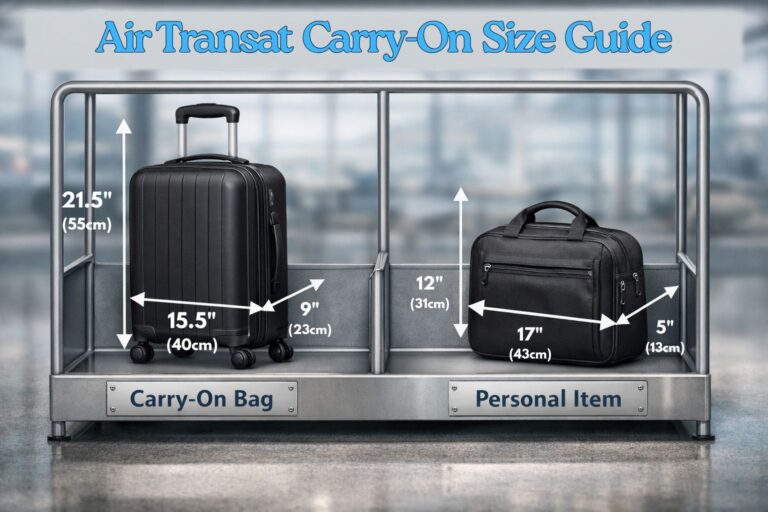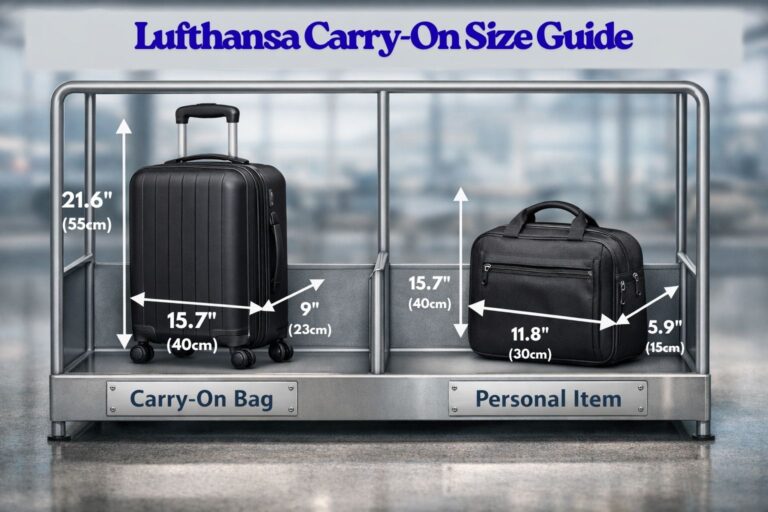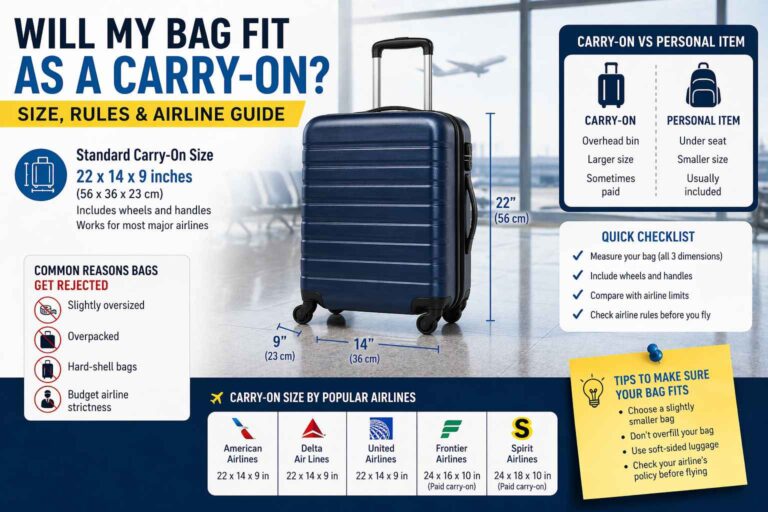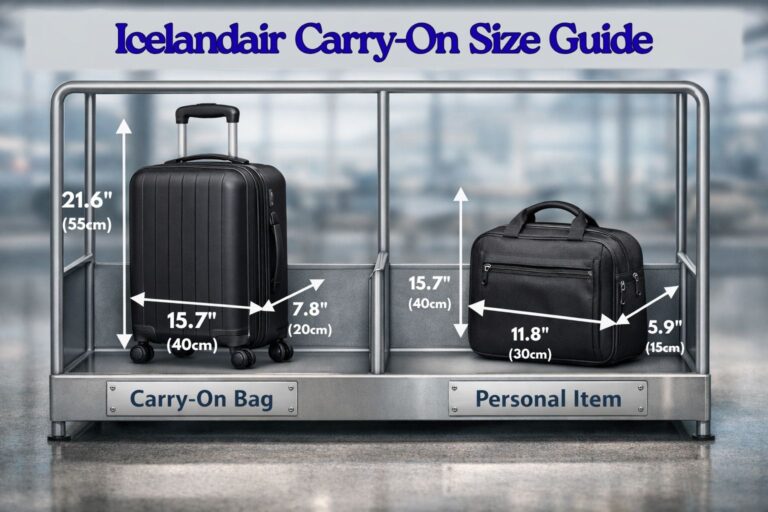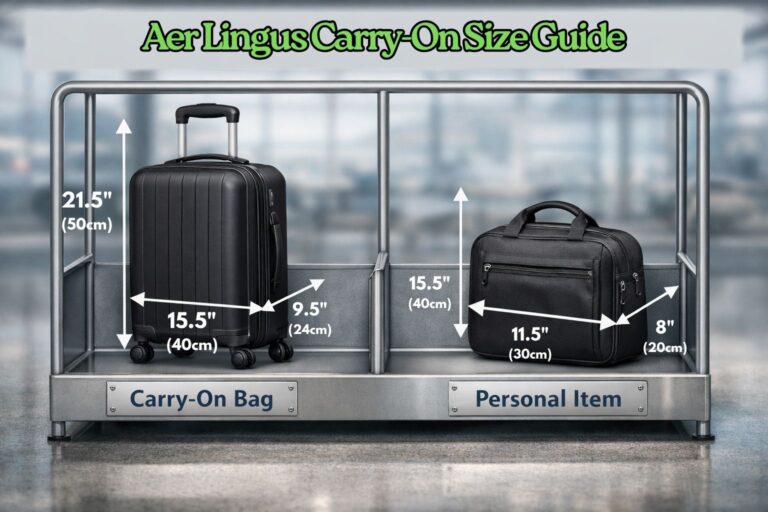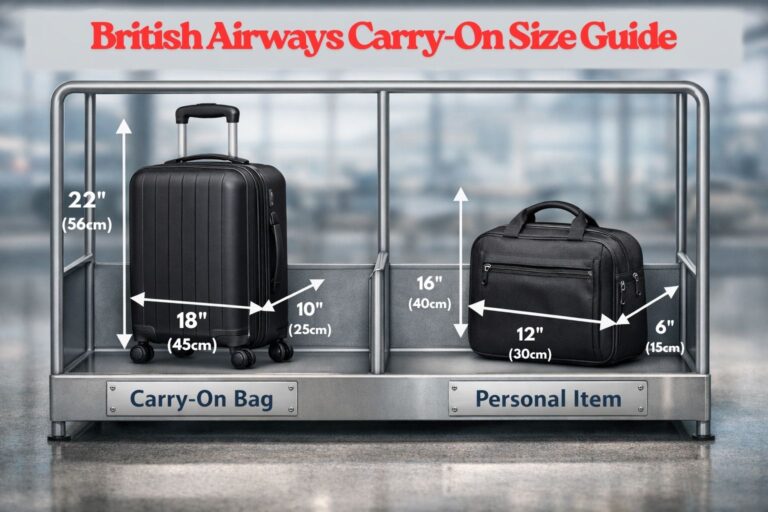
What Counts as Carry-On Luggage? Full Guide (2026)
You’re boarding your flight, and everything seems fine—until a gate agent stops you. Your bag looks small enough, but they say it counts as a carry-on, not a personal item. Now you’re either checking it or paying extra.
This kind of confusion happens all the time. The issue isn’t just size—it’s how airlines classify your bag. Let’s break it down clearly so you know exactly what counts as carry-on luggage.
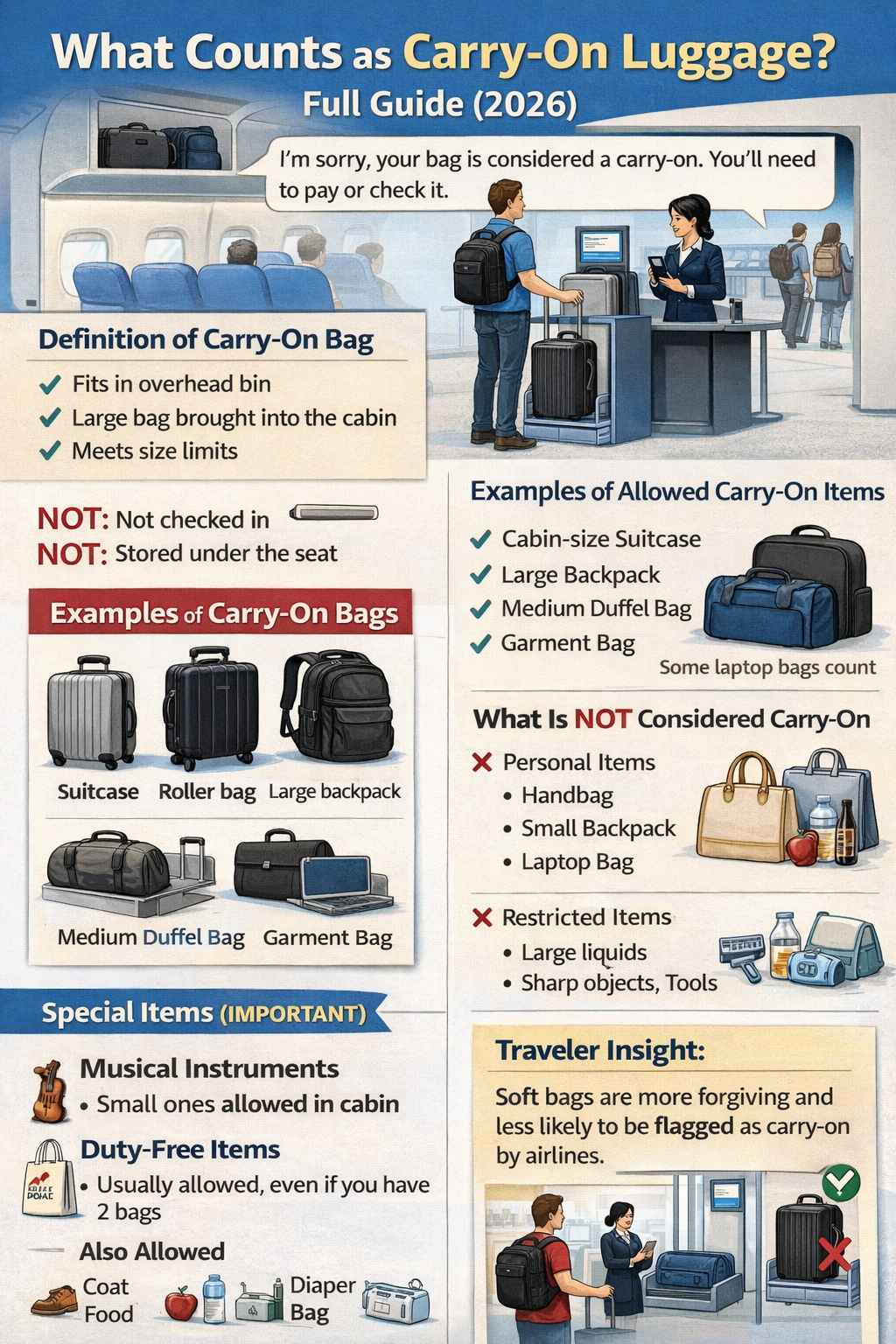
Definition of Carry-On Bag
A carry-on bag is any piece of luggage you bring into the cabin and store in the overhead compartment.
It’s usually the larger of the two bags you’re allowed to take onboard.
Typical carry-on bags include:
- Cabin-size suitcase
- Roller bag
- Large travel backpack
- Medium duffel bag
To qualify as carry-on, your bag must:
- Fit within airline size limits
- Be small enough for overhead storage
- Be handled by you without assistance
If your bag doesn’t meet these conditions, it may need to be checked.
Examples of Allowed Carry-On Items
Not all carry-on bags look the same. Airlines allow different types of luggage as long as they meet size requirements.
Here are common examples:
Suitcases
- Small hard-shell or soft-shell cabin luggage
- Most common type of carry-on
Backpacks
- Larger backpacks can count as carry-on
- Smaller ones may be treated as personal items
Duffel Bags
- Flexible and easy to fit in overhead bins
- Can work as carry-on if not overpacked
Garment Bags
- Used for suits or dresses
- Allowed if within size limits
Laptop Bags (Sometimes)
- If large enough, may be counted as carry-on instead of a personal item
Real-world example:
A compact suitcase + slim backpack works fine. But if your backpack is bulky and doesn’t fit under the seat, it may be treated as a carry-on instead.
What Is NOT Considered Carry-On
Some items don’t count as carry-on luggage, even if you bring them onboard.
Personal Items
These are separate from carry-on:
- Handbags
- Small backpacks
- Laptop bags
They must fit under the seat and are usually included for free.
Checked Baggage
Large suitcases and oversized bags:
- Go in the cargo hold
- Cannot be brought into the cabin
Restricted or Prohibited Items
Some items are not allowed in carry-on baggage at all, such as:
- Large liquid containers
- Sharp objects
- Certain tools
These must either be checked or left behind.
Special Items (IMPORTANT)
Some items don’t follow standard carry-on rules but are still allowed onboard.
Musical Instruments
- Small instruments (like violins) can be carried in the cabin
- Must fit in overhead storage or under the seat
Larger instruments may require:
- Special handling
- Purchasing an extra seat
Duty-Free Items
Items bought after security:
- Usually allowed onboard
- May not count toward carry-on limits in some cases
However, this can change depending on:
- Airline policy
- Connecting flights
Important:
Duty-free liquids may still be restricted during connections if you go through security again.
Other Allowed Items
Many airlines allow these in addition to your carry-on:
- Coat or jacket
- Food for the flight
- Infant items (like diaper bags)
- Medical devices
These don’t usually count toward your baggage allowance.
Airline Carry-On Rules
- American baggage rules
- Delta carry-on allowance
- United cabin baggage size
- Spirit personal item rules
- Frontier baggage policy
Airline Differences
Not all airlines treat carry-on luggage the same way.
Budget Airlines (Strict)
- Spirit, Frontier, Ryanair
- Personal item only is free
- Carry-on often costs extra
- Strict size enforcement
Even slightly oversized bags are often flagged.
Standard Airlines (Moderate)
- Delta, United, Air Canada
- Carry-on + personal item included
- More flexibility if your bag fits in the cabin
International Airlines
- Similar size limits but may include weight restrictions
- Some enforce rules more strictly at check-in
Warning:
A bag accepted on one airline may not be allowed on another, especially when switching between regions.
Traveler Insight
From experience, the biggest confusion comes from how bags are judged at the airport.
Airlines don’t just look at measurements—they look at how your bag fits in real situations. If it appears bulky or overpacked, you’re more likely to be stopped.
Budget airlines are the strictest. I’ve seen passengers asked to place bags in sizer bins right before boarding. If it doesn’t fit perfectly, it’s treated as a paid carry-on or checked bag.
On full-service airlines, things are more relaxed, but only up to a point. On busy flights, even standard-size bags may be gate-checked if overhead space runs out.
One thing that helps:
Soft bags are more forgiving than hard cases. They’re easier to fit into tight spaces and less likely to cause issues.
Related Guides
FAQs
What counts as a carry-on bag?
Any bag stored in the overhead bin that meets airline size limits counts as carry-on.
Can a backpack be a carry-on?
Yes, if it’s large enough and doesn’t fit under the seat, it will be treated as a carry-on.
Is a purse considered a carry-on?
No, a purse is usually considered a personal item.
Can I bring a carry-on and a personal item?
Most airlines allow both, but some budget airlines only include a personal item.
Do duty-free items count as carry-on?
Sometimes no, but rules vary depending on the airline and route.
What happens if my carry-on is too big?
You may need to check it at the gate and pay additional fees.
Once you understand how airlines classify luggage, packing becomes much easier. The key is not just choosing the right bag—but knowing how it will be treated at the airport.