Carry-On vs Checked Bag: Size, Rules & What to Choose
You’re packing for a trip, suitcase open, trying to decide—should you take everything in one bag or check it in? The carry on vs checked bag choice comes up on almost every trip, and it’s not always obvious which one is better.
Some travelers prefer to keep everything with them, while others don’t mind handing off a larger suitcase at the airport. The difference between checked bag vs carry on comes down to size, cost, and how you like to travel.
In this guide, you’ll get a clear comparison of both options, when to use each, and how to pack smart based on your trip.
Carry-On vs Checked Bag: Key Differences (Quick Comparison)
Here’s a simple breakdown of carry on bag vs checked bag:
| Feature | Carry-On Bag | Checked Bag |
|---|---|---|
| Placement | Overhead bin | Cargo hold |
| Size | Smaller | Larger |
| Cost | Often included / sometimes paid | Usually paid |
| Access | During flight | Not accessible |
| Risk | Low | Possible delay |
If you want quick access to your items and less waiting after landing, a carry-on is often the better option. If you need more space, a checked bag gives you that flexibility.
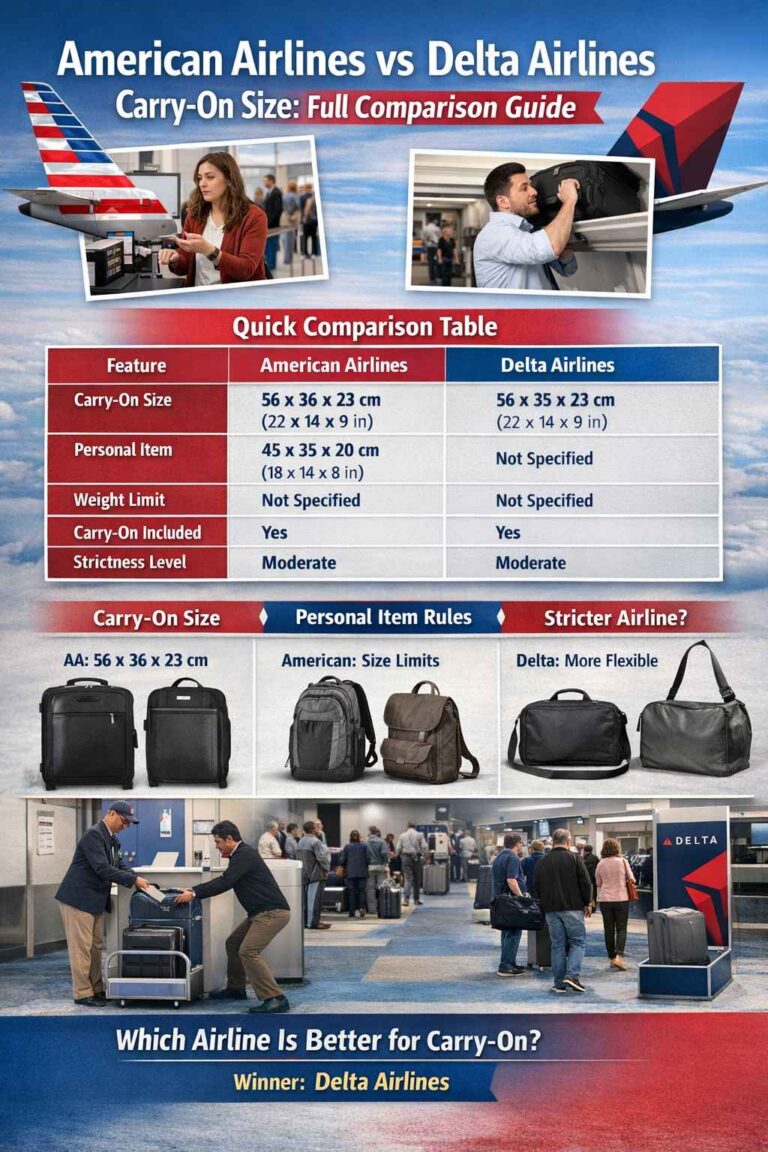
When comparing carry-on vs checked bag options, it helps to understand how different airlines set their limits. For example, you can check the exact carry-on size limits for American Airlines or review Delta cabin baggage dimensions to see how standard rules apply across major carriers. If you’re flying budget, the Frontier baggage policy shows how fees and size rules can differ.
Carry-On vs Checked Bag Size Differences
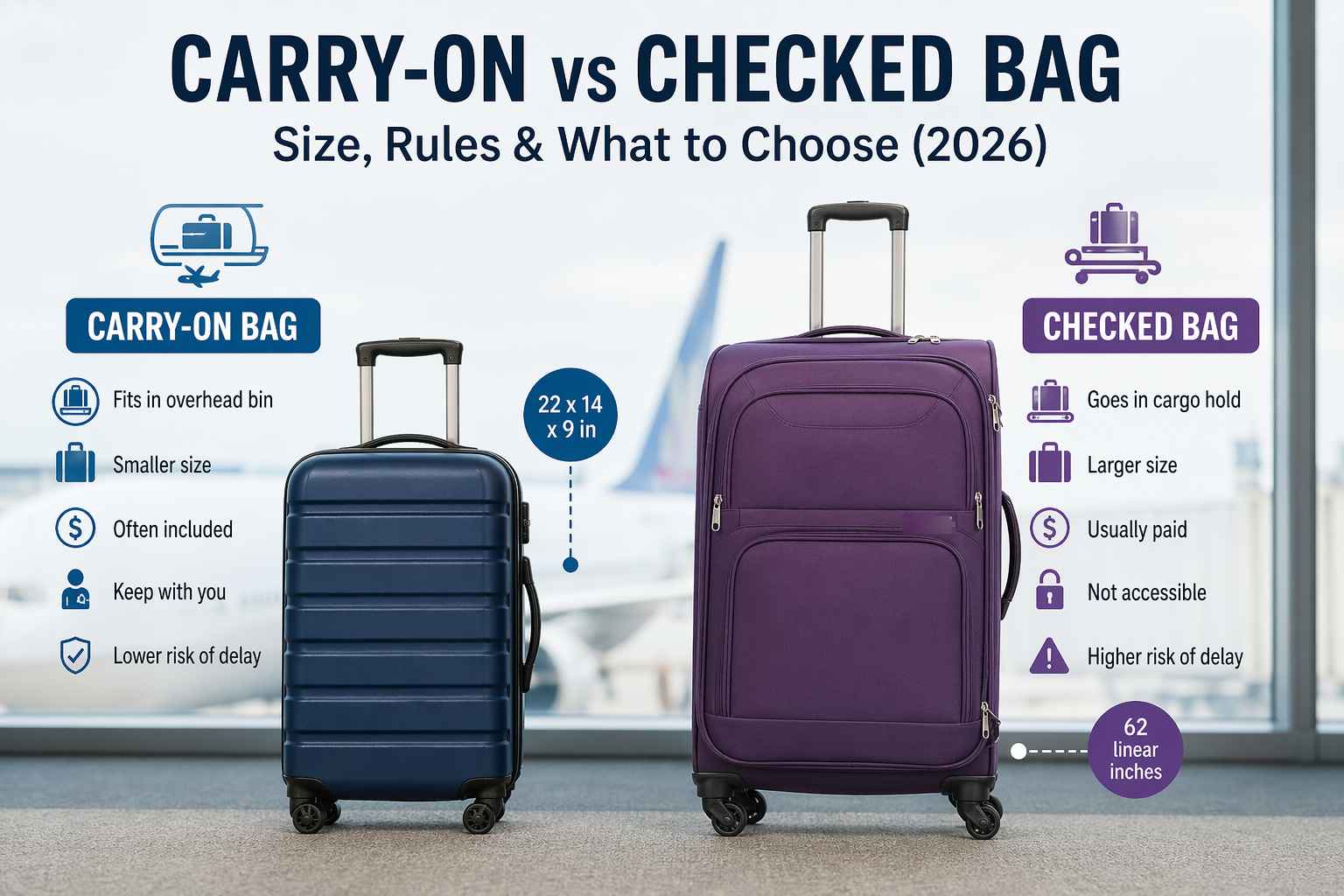
When comparing carry on vs checked bag size, the difference is noticeable.
Carry-On Size:
- Around 22 x 14 x 9 inches
- Includes wheels and handles
- Designed to fit in overhead storage
Checked Bag Size:
- Around 62 linear inches (length + width + height)
- Much larger capacity
- Stored in the aircraft’s cargo hold
Size matters because airlines measure your bag based on the full dimensions, not just the main body. Even small extensions like wheels can make a difference.
What Is a Carry-On Bag? (Carry-On Luggage Explained)
A carry-on bag is the luggage you bring with you into the cabin and place in the overhead bin. When comparing carry on luggage vs checked bag, this is the smaller and more convenient option.
Carry-on bags:
- Must follow strict size limits
- Are usually limited to one per passenger
- Are often paired with a personal item (like a backpack or handbag)
If you’re unsure about your bag size, it helps to check a guide like “Will my bag fit as a carry-on” before heading to the airport.
If you’re unsure whether your luggage qualifies, it’s worth checking a detailed guide on will my bag fit as a carry-on before you travel. You can also review what counts as carry-on luggage to understand what airlines actually allow in the cabin.
What Is a Checked Bag? (Checked Baggage Explained)
A checked bag is the larger suitcase you hand over at the airport counter before security. It travels in the cargo hold and is returned to you at baggage claim after landing.
Checked baggage:
- Allows more space for packing
- Is better for longer trips
- Comes with size and weight limits
While it gives you more room, you won’t have access to it during the flight.
Carry-On vs Checked Bag Cost Comparison
Cost plays a big role when deciding between carry on vs checked bag.
Carry-On:
- Included with many full-service airlines
- Often paid on budget airlines
Checked Bag:
- Usually comes with a fee
- Price depends on airline and route
Real-world difference:
- Budget airlines may charge for both carry-on and checked bags
- Full-service airlines often include a carry-on but charge for checked baggage
Checking baggage rules in advance can help you plan better.
What to Pack in Carry-On vs Checked Bag
Knowing what to pack in carry on vs checked bag can make your trip easier.
Carry-On Bag:
- Travel documents
- Electronics (laptop, phone, chargers)
- Medications
- A change of clothes
- Valuables
Size differences between airlines can be small but still matter. If you’re flying internationally, take a look at international carry-on size rules to avoid surprises. For example, United Airlines carry-on size rules are similar to others, but certain fare types come with restrictions.
Checked Bag:
- Clothing for your trip
- Shoes
- Toiletries and liquids
- Bulkier items
Keeping essentials in your carry-on ensures you still have what you need, even if your checked bag is delayed.
What to Put in Carry-On vs Checked Bag (Smart Packing Guide)
When deciding what to put in carry on vs checked bag, think about access and safety.
Tips:
- Keep fragile items in your carry-on
- Pack liquids in your checked bag (within airline rules)
- Avoid putting valuables in checked luggage
- Use packing cubes to organize space
Security rules also play a role, especially with liquids and electronics, so plan accordingly.
Carry-On vs Checked Bag vs Personal Item
There’s one more category to consider: your personal item.
| Feature | Carry-On | Personal Item | Checked Bag |
|---|---|---|---|
| Placement | Overhead | Under seat | Cargo hold |
| Size | Medium | Small | Large |
| Cost | Sometimes paid | Usually free | Paid |
When looking at checked vs carry on vs personal item, each serves a different purpose. Many travelers use all three to balance space and convenience.
Common Mistakes When Choosing Carry-On vs Checked Bag
A few common mistakes can cause issues at the airport:
- Packing a carry-on that’s slightly too large
- Overfilling your bag so it won’t fit properly
- Not checking airline baggage rules
- Packing restricted items in the wrong bag
Even small oversights can lead to delays or extra charges.
Which Is Better: Carry-On or Checked Bag?
So, which is better—carry-on or checked bag?
Choose carry-on if:
- You’re taking a short trip
- You want to keep things simple
- You prefer quick airport exits
Choose checked bag if:
- You’re traveling for a longer time
- You need more clothing or gear
- You’re carrying liquids or bulky items
There’s no one-size answer. It depends on how you travel.
Finally, don’t forget about your smaller bag. Understanding the difference between cabin luggage and personal items can help you pack smarter. A quick article on what size bag fits under airline seat and carry-on vs personal item rules can help you use both allowances efficiently.
How to Choose Between Carry-On vs Checked Bag
If you’re still deciding, consider these factors:
- Trip duration: Short trips usually work with a carry-on
- Airline rules: Some airlines are stricter than others
- Budget: Fees can vary widely
- Convenience: Carry-on is faster, checked bag gives more space
Balancing these factors will help you make the right choice.
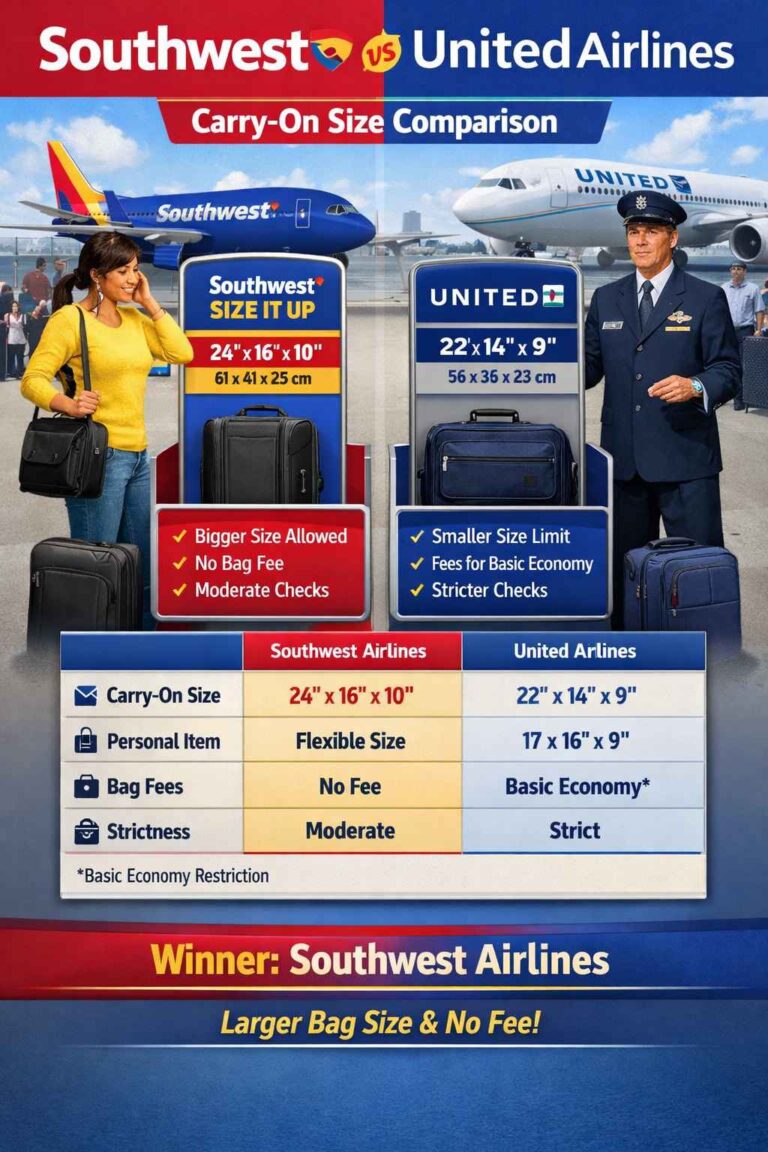
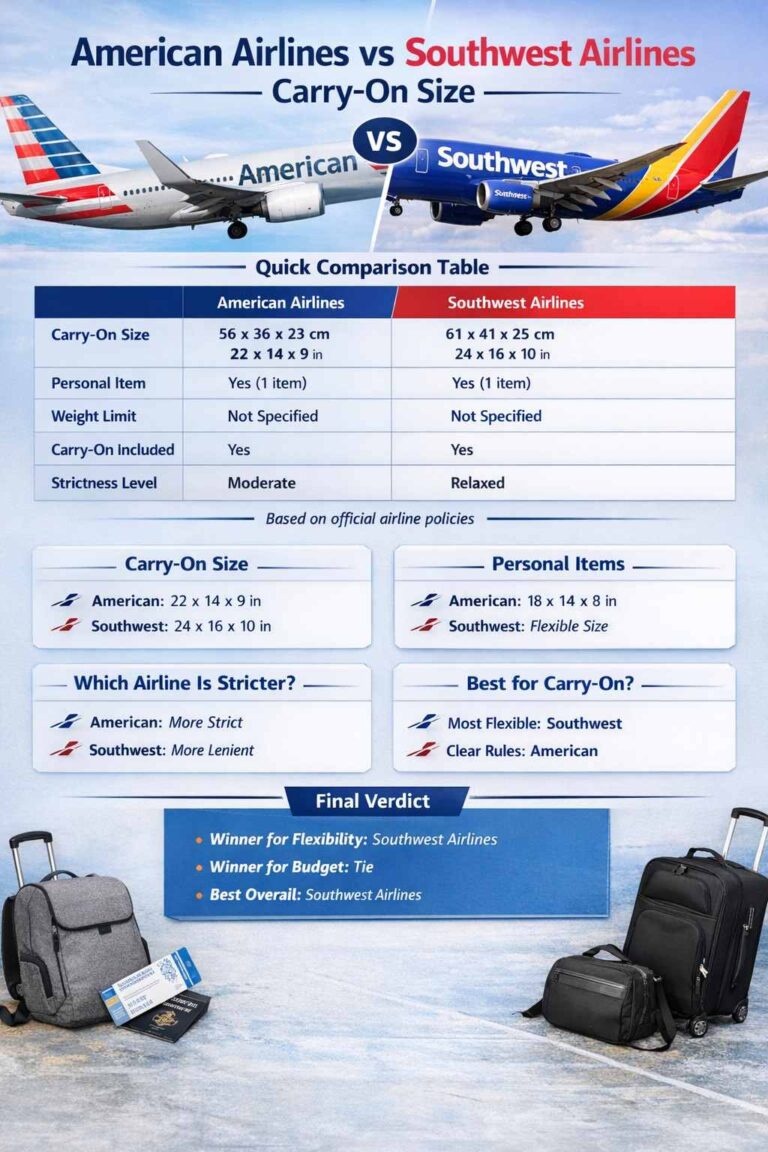
If you’re trying to decide which airline is more flexible, comparison guides can help. For instance, this breakdown of American Airlines vs Delta carry-on size gives a clearer picture of how policies differ. You can also compare Southwest vs United baggage rules to see which airline is more traveler-friendly.
FAQs About Carry-On vs Checked Bag
Is carry on better than checked bag?
It depends on your trip. Carry-on is more convenient, while checked bags offer more space.
Can I bring both carry on and checked bag?
Yes, most airlines allow both, though fees may apply for checked baggage.
What happens if my carry-on is too big?
You may be asked to check it at the airport, sometimes with additional charges.
What is the size difference between carry-on and checked bag?
Carry-ons are smaller (around 22 x 14 x 9 inches), while checked bags are much larger (around 62 linear inches).
CONCLUSION
When deciding between carry on vs checked bag, it really comes down to your trip and travel style. If you’re packing light and want to move quickly, a carry-on works well. If you need more space and don’t mind waiting at baggage claim, a checked bag is the better choice.
For short trips, stick with a carry-on. For longer journeys, a checked bag gives you the extra room you need.