Carry-On vs Personal Item: Key Differences Explained (2026)
You’re at the gate, ready to board, when suddenly staff ask you to step aside. Your bag looks fine to you—but they say it counts as a carry-on, not a personal item. Now you’re paying an unexpected fee.
This happens more often than you’d think. The confusion between a carry-on and a personal item is one of the biggest reasons travelers get charged at the airport.
Let’s clear it up so you know exactly what counts—and what doesn’t.
What Is a Carry-On Bag?
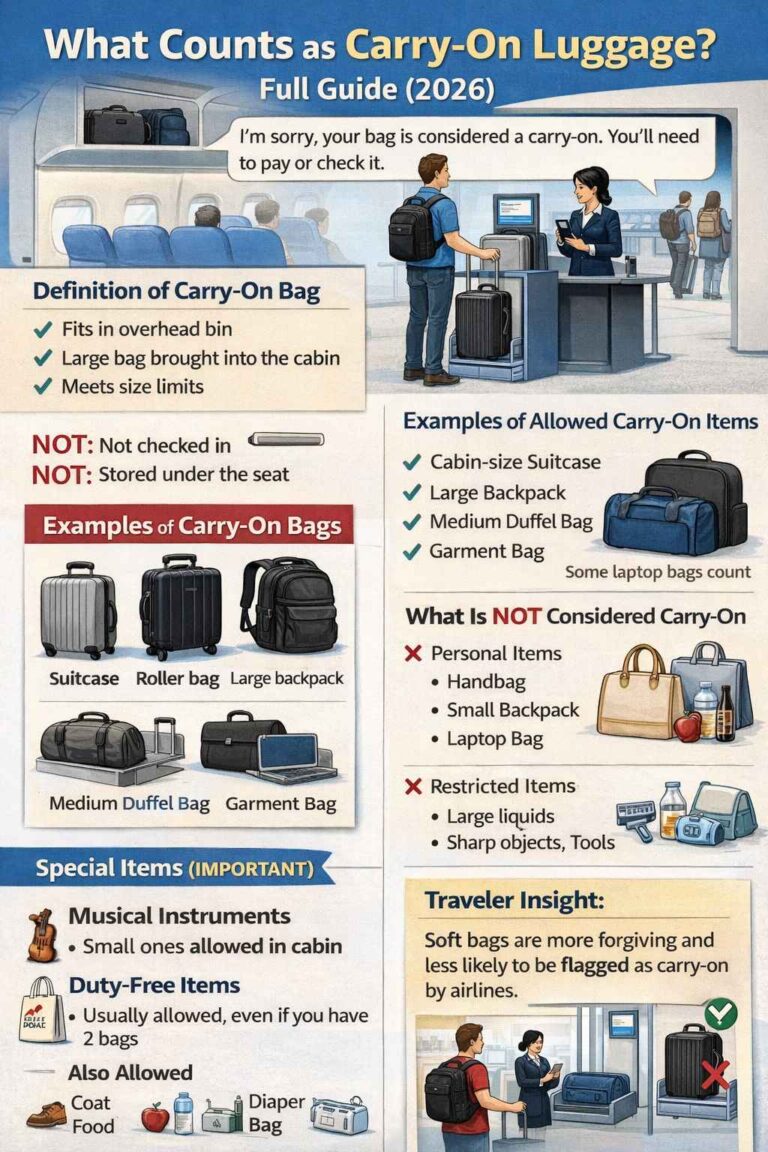
A carry-on bag is the larger bag you bring into the cabin and store in the overhead bin.
Typical examples include:
- Small suitcase (roller bag)
- Cabin-size luggage
- Large duffel bag
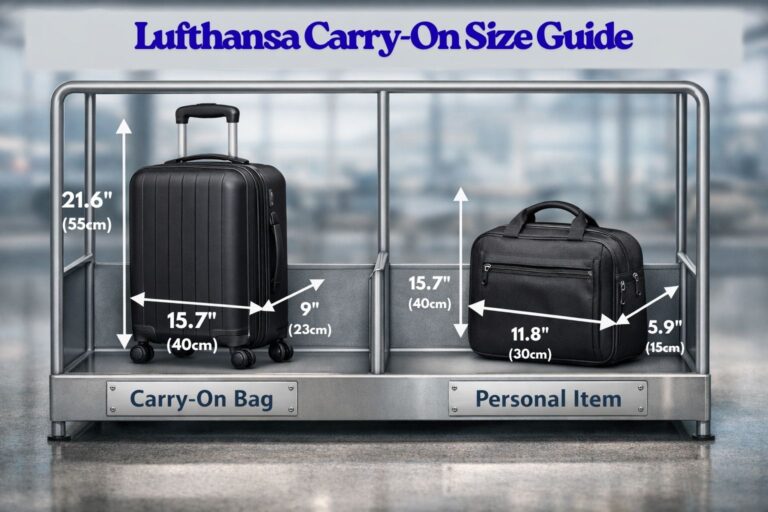
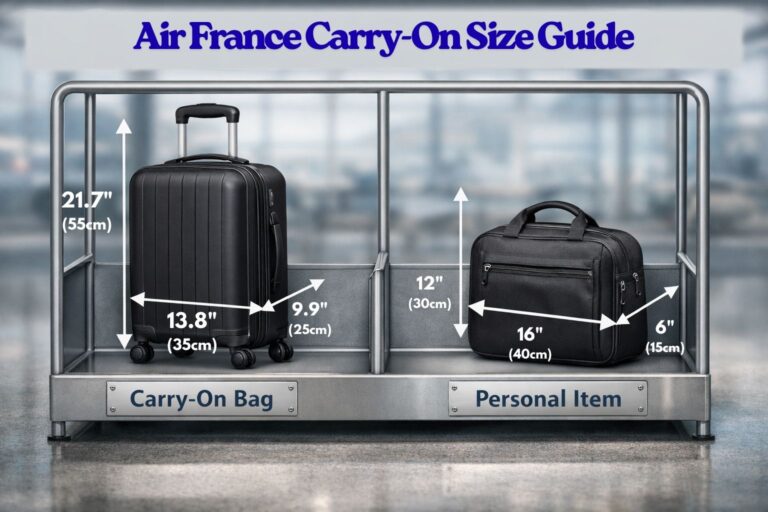
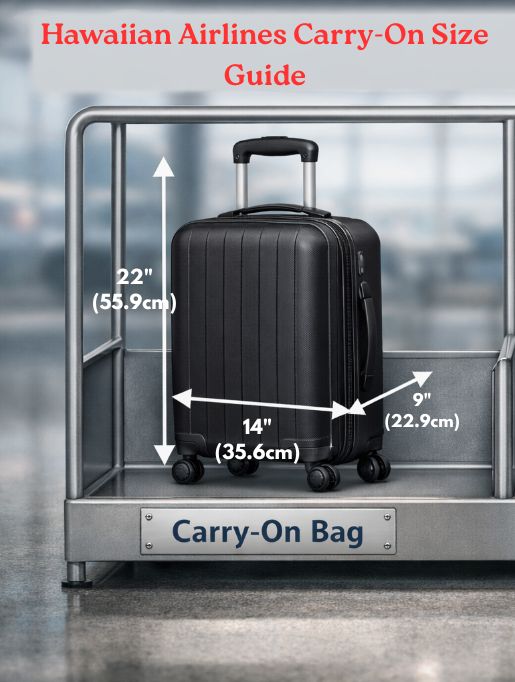
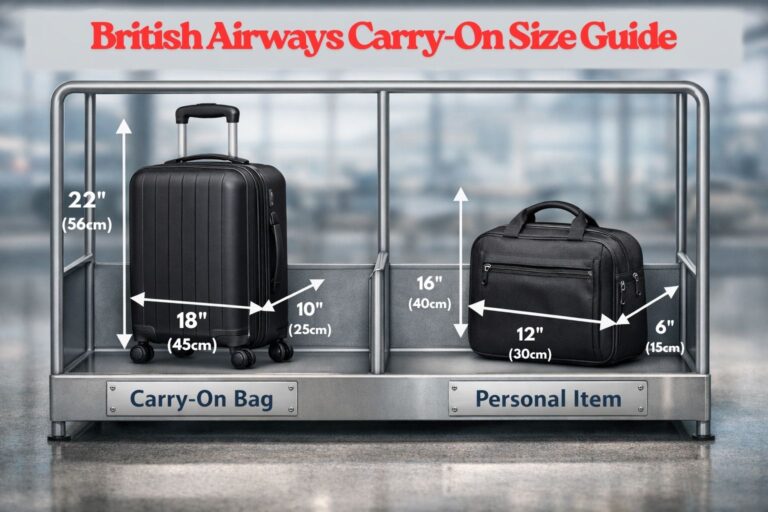
Most airlines allow one carry-on bag per passenger, but the size limit varies. A common range is around 22 x 14 x 9 inches, though this depends on the airline.
Your carry-on must:
- Fit in overhead storage
- Stay within airline size restrictions
- Be manageable enough for you to lift
Important:
Some airlines, especially low-cost ones, don’t include a carry-on in the base fare.
What Is a Personal Item?
A personal item is a smaller bag that fits under the seat in front of you.
Common examples:
- Backpack
- Handbag
- Laptop bag
- Small tote
This is usually included for free, even on budget airlines.
The key rule:
- It must fit completely under the seat
Airlines don’t always give exact dimensions, but the size is clearly smaller than a carry-on.
Simple way to think about it:
If it goes under the seat, it’s a personal item. If it goes overhead, it’s a carry-on.
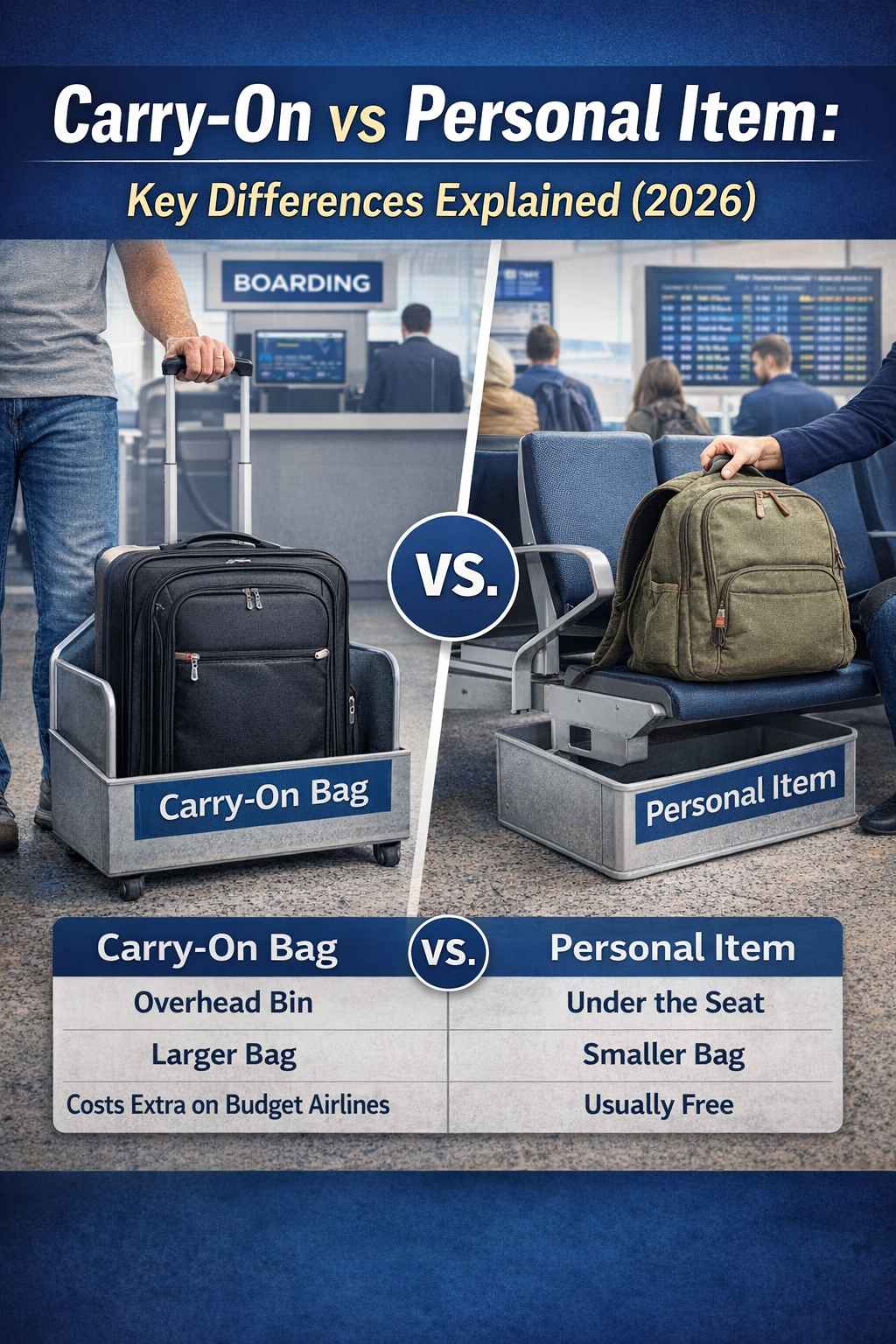
Carry-On vs Personal Item Key Differences
| Feature | Carry-On Bag | Personal Item |
|---|---|---|
| Storage location | Overhead bin | Under the seat |
| Size | Larger | Smaller |
| Examples | Suitcase, large duffel | Backpack, purse, laptop bag |
| Included in fare | Not always (budget airlines) | Usually included |
| Airline checks | Measured with sizer bins | Checked visually or with smaller sizer |
Real Examples
Let’s look at real-world situations.
Backpack vs Suitcase
- A small backpack usually counts as a personal item
- A large travel backpack may count as a carry-on
This is where people get confused.
Example:
A slim laptop backpack slides under the seat—no issue.
A fully packed hiking backpack sticks out—now it’s treated as a carry-on.
Duffel Bag Scenario
A medium duffel bag can go either way:
- Lightly packed → personal item
- Fully packed → carry-on
It depends on size and how it fits in the sizer.
Airline Examples
- Spirit personal item rules
- Frontier baggage policy
- Delta carry-on allowance
- United cabin baggage size
- Air Canada baggage rules
Airline Differences
Not all airlines treat bags the same way.
Budget Airlines (Strict)
- Spirit / Frontier / Ryanair
- Only personal item included
- Carry-on costs extra
- Strict size checks at the gate
Even slightly oversized personal items may be charged.
Standard Airlines (More Flexible)
- Delta / United / Alaska
- Carry-on + personal item included
- Less aggressive enforcement
- Focus on whether it fits in cabin storage
European Low-Cost Airlines
- Ryanair / easyJet
- Very strict on personal item size
- Often allow only a small bag for free
- Larger cabin bags require payment
Warning:
A bag that works on Delta may not be accepted on Ryanair.
What Happens If You Bring Two Bags?
If you bring both a carry-on and a personal item, most airlines allow it—but only if:
- The personal item fits under the seat
- The carry-on meets size limits
If you exceed this:
- You may be asked to check one bag
- You could be charged at the gate
Common mistake:
Carrying a backpack + shopping bag + purse.
Even if each item is small, airlines may count them together.
Traveler Insight
From experience, the biggest issue isn’t size—it’s perception.
At busy gates, staff don’t measure every bag. They look for anything that appears too large. If your bag looks bulky, you’re more likely to be stopped.
Budget airlines are the strictest. I’ve seen passengers asked to place bags in sizer bins right before boarding. If it doesn’t fit perfectly, they’re charged immediately.
On the other hand, full-service airlines are more relaxed, especially if overhead space is available. But even they can become strict on full flights.
One thing that helps:
A soft-sided backpack is much easier to pass as a personal item than a rigid bag.
Compare Airline Policies
FAQs
What is the difference between a carry-on and a personal item?
A carry-on goes in the overhead bin, while a personal item fits under the seat.
Can a backpack be a personal item?
Yes, if it fits under the seat and meets size expectations.
Do all airlines allow both a carry-on and a personal item?
Most do, but some budget airlines only include a personal item.
What happens if my personal item is too big?
It may be treated as a carry-on, and you could be charged.
Can I bring a purse and a backpack?
Usually no—airlines may count both as separate items unless one fits inside the other.
Are carry-on rules the same for all airlines?
No, rules vary significantly, especially between budget and full-service airlines.
Understanding this difference makes travel much easier. Once you know how airlines classify your bag, you can pack smarter and move through boarding without surprises.