Carry-On Size in cm vs Inches (2026): Easy Conversion Guide
If you’ve ever checked airline baggage rules and felt confused between cm and inches, you’re not alone. One airline lists carry-on size in inches, another in centimeters, and suddenly you’re not sure if your bag fits or not.
This mix of units causes real problems at the airport. A bag that looks fine on paper might actually exceed the allowed size once converted properly. Let’s break it down clearly so you can compare carry-on sizes without guessing.
Standard Carry-On Size in Inches
Most airlines—especially in the U.S.—use inches to define carry-on size.
A very common standard is:
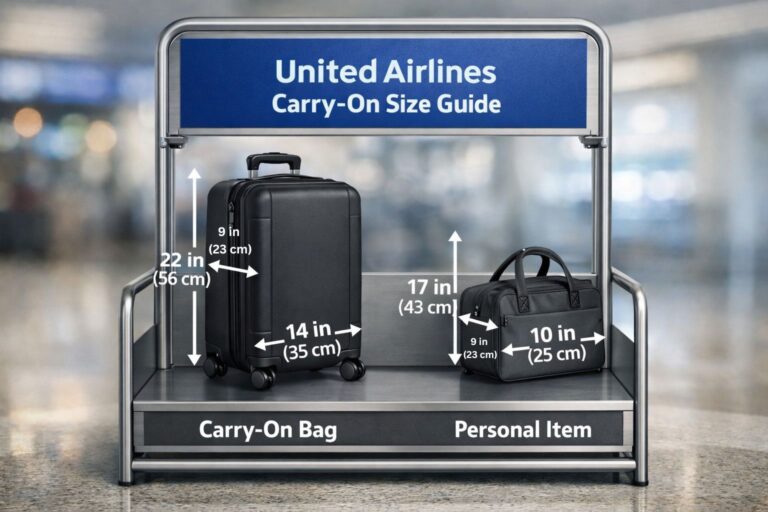
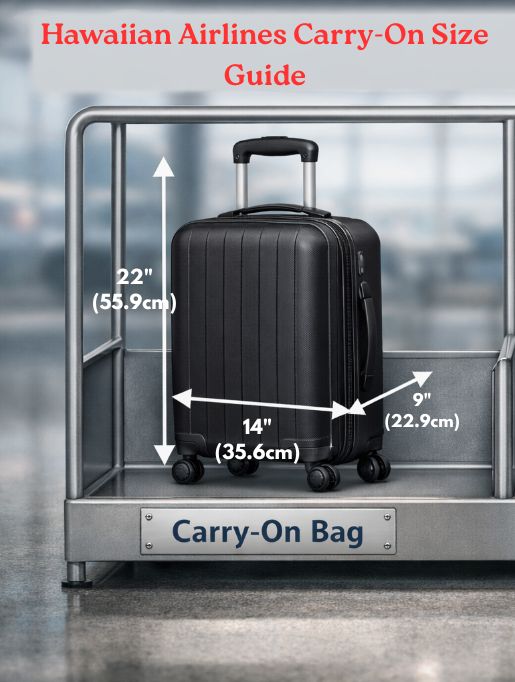
- 22 x 14 x 9 inches
This includes:
- Wheels
- Handles
- External pockets
This size works for many major airlines like Delta, United, and Alaska Airlines.
However, not all airlines follow this exact size. Some allow slightly narrower or shorter bags, especially on smaller aircraft.
Practical tip:
When shopping for luggage, many brands label bags as “carry-on size,” but that doesn’t guarantee they meet every airline’s rules.
Standard Carry-On Size in cm
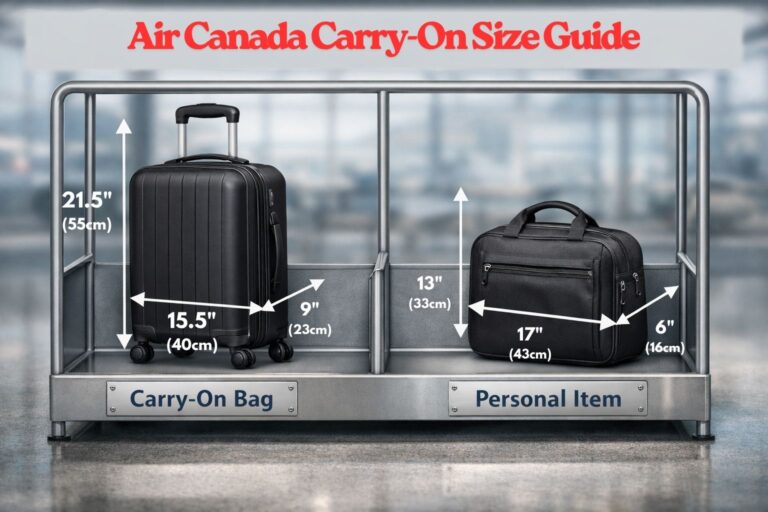
Airlines in Europe, Canada, and Asia usually list dimensions in centimeters.
A typical carry-on size looks like:
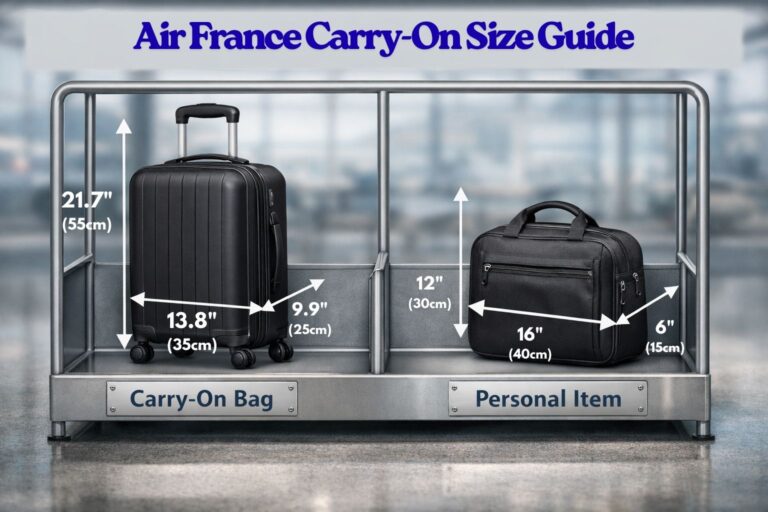
- 55 x 40 x 23 cm
This is very close to the U.S. standard, just expressed in metric units.
But here’s where things get tricky:
- Some airlines reduce width or depth slightly
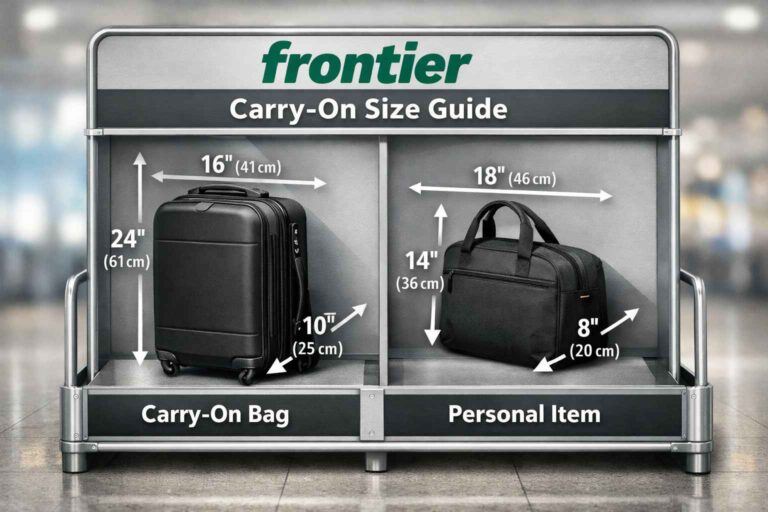
- Low-cost carriers may allow even smaller sizes
Example:
A bag that’s 56 cm tall may pass on one airline but fail on another that caps height at 55 cm.
Conversion Table (IMPORTANT)
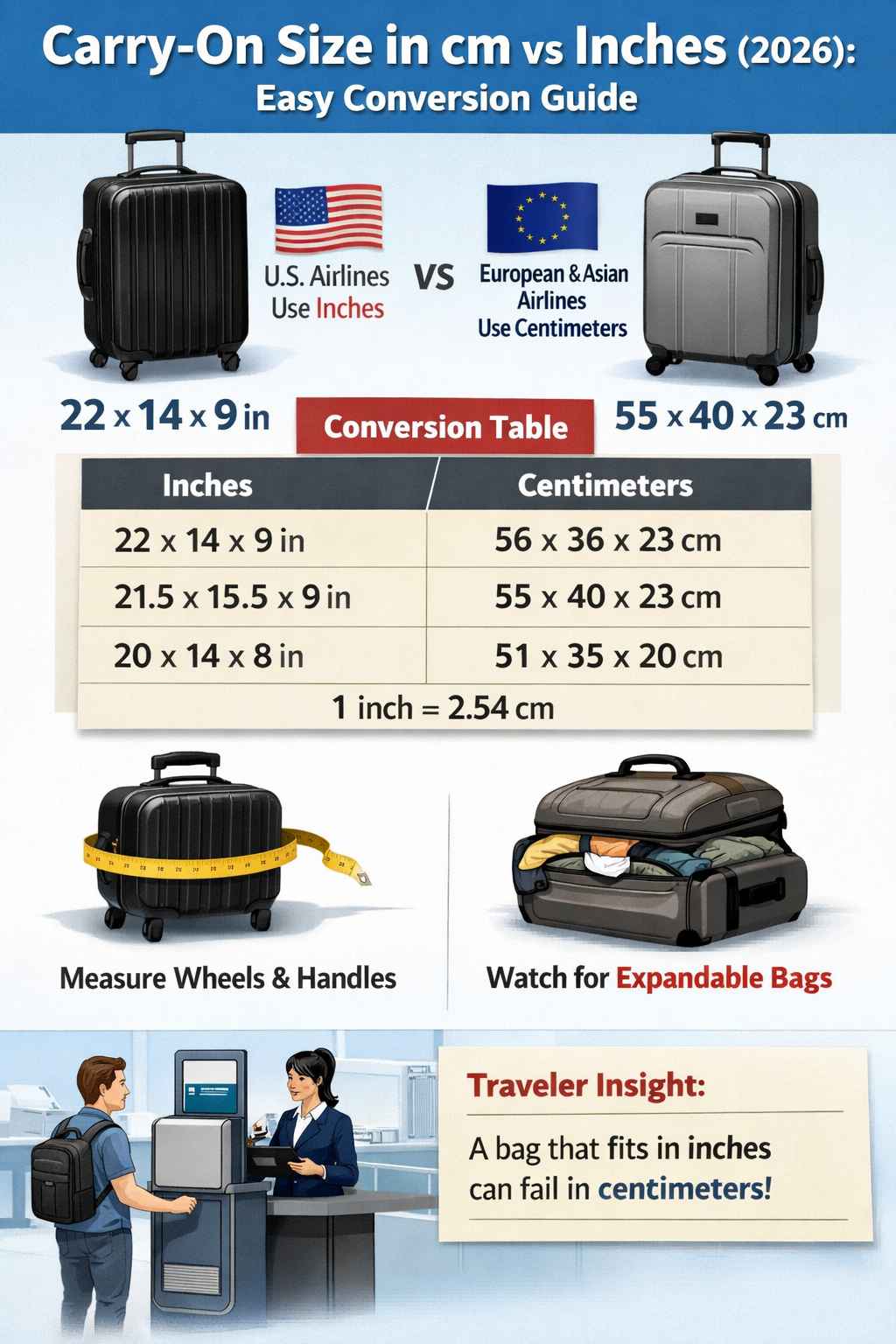
Here’s a simple conversion guide you can rely on:
| Inches | Centimeters |
|---|---|
| 22 x 14 x 9 in | 56 x 36 x 23 cm |
| 21.5 x 15.5 x 9 in | 55 x 40 x 23 cm |
| 20 x 14 x 8 in | 51 x 35 x 20 cm |
Quick conversion rule:
- 1 inch = 2.54 cm
If you’re ever unsure, multiply inches by 2.54 to get centimeters.
Airline Carry-On Size Examples
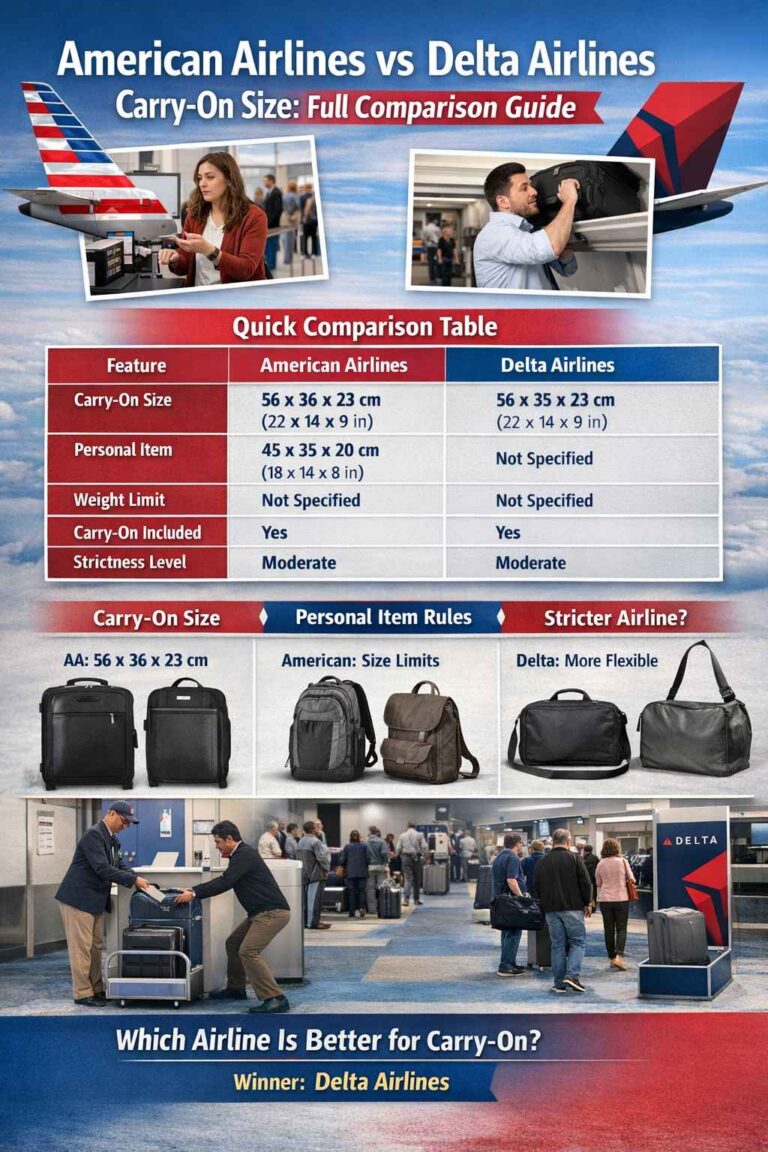
- American carry-on size
- Delta carry-on dimensions
- United cabin luggage size
- Southwest baggage size
- Alaska carry-on allowance
Why Airlines Use Different Units
The reason comes down to geography and industry standards.
- U.S. airlines use inches
- European and Asian airlines use centimeters
Airlines don’t convert sizes to match each other—they define their own limits based on:
- Aircraft storage space
- Route type (domestic vs international)
- Business model (budget vs full-service)
That’s why two airlines can have nearly identical carry-on sizes, but the numbers look different.
Real Airline Examples
Let’s look at how this plays out in real situations.
U.S. Airlines
- Typically around 22 x 14 x 9 inches
- Focus on whether the bag fits in overhead bins
These airlines are generally more flexible as long as your bag fits physically.
European Airlines
- Often around 55 x 40 x 20 cm
- Slightly stricter on depth
Budget airlines like Ryanair may allow smaller bags unless you pay for a larger cabin bag.
Asian Airlines
- Similar size limits in cm
- Often include strict weight limits
Even if your bag meets size requirements, it may still be checked if it’s too heavy.
Tips to Avoid Measurement Mistakes
This is where most travelers go wrong.
Measure the Full Bag
Always include:
- Wheels
- Handles
Ignoring these can push your bag over the limit.
Check After Packing
Expandable bags can grow beyond the allowed size once filled.
Example:
A suitcase that fits empty may exceed limits after you zip it closed with extra items.
Follow the Strictest Airline
If you’re flying multiple airlines, always follow the smallest size limit across your itinerary.
Don’t Rely on Labels
“Cabin size” or “carry-on approved” labels are not universal.
Always verify with your airline.
Traveler Insight
From experience, unit confusion causes more issues than people expect.
I’ve seen travelers assume their bag fits because it matches 22 inches, but when converted, it slightly exceeds the airline’s cm limit. That small difference is enough for some airlines to reject the bag.
Another common situation happens on connecting flights. A bag accepted on a U.S. airline might be flagged on a European carrier because their size limit is tighter by just a few centimeters.
Airport staff don’t usually calculate conversions on the spot. They use sizer bins. If your bag doesn’t fit, it doesn’t matter what the numbers say—you’ll need to check it.
Helpful Guides
FAQs
What is the standard carry-on size in inches?
The most common size is 22 x 14 x 9 inches, including wheels and handles.
What is the standard carry-on size in cm?
A typical size is 55 x 40 x 23 cm, depending on the airline.
Is 22 inches the same as 55 cm?
Not exactly. 22 inches equals about 56 cm, which can exceed some airline limits.
Why do airlines use different units?
It depends on the region—U.S. airlines use inches, while most international airlines use centimeters.
Can a bag fit in inches but fail in cm?
Yes. Small differences in conversion can push your bag over the allowed limit.
What’s the safest carry-on size for all airlines?
A slightly smaller size, like 55 x 35 x 20 cm, works across most airlines.
Understanding both units gives you an advantage. Once you know how to convert and compare sizes, you’ll pack smarter and avoid last-minute surprises at the airport.