Carry-On Liquid Size Rules: TSA & International Guide
You’re at airport security. Your bag goes through the scanner, and a staff member pulls it aside. Inside? A brand-new bottle of perfume or sunscreen you just bought. A few minutes later, it’s gone—confiscated.
This happens every day, even to experienced travelers. The reason is simple: carry-on liquid rules are strict, and they’re enforced differently depending on where you’re flying.
Let’s break it down so you don’t lose your items at security.
What Is the Liquid Rule for Carry-On?
The standard rule followed worldwide is:
- Maximum 100 ml (3.4 oz) per container
- All liquids must fit inside a single clear, resealable bag
This is often called the 100 ml rule.
Here’s what matters most:
- It’s not about how much liquid is inside
- It’s about the container size
So even if your bottle has only 50 ml left, if the container says 200 ml, it won’t be allowed.
This is one of the most common mistakes travelers make.
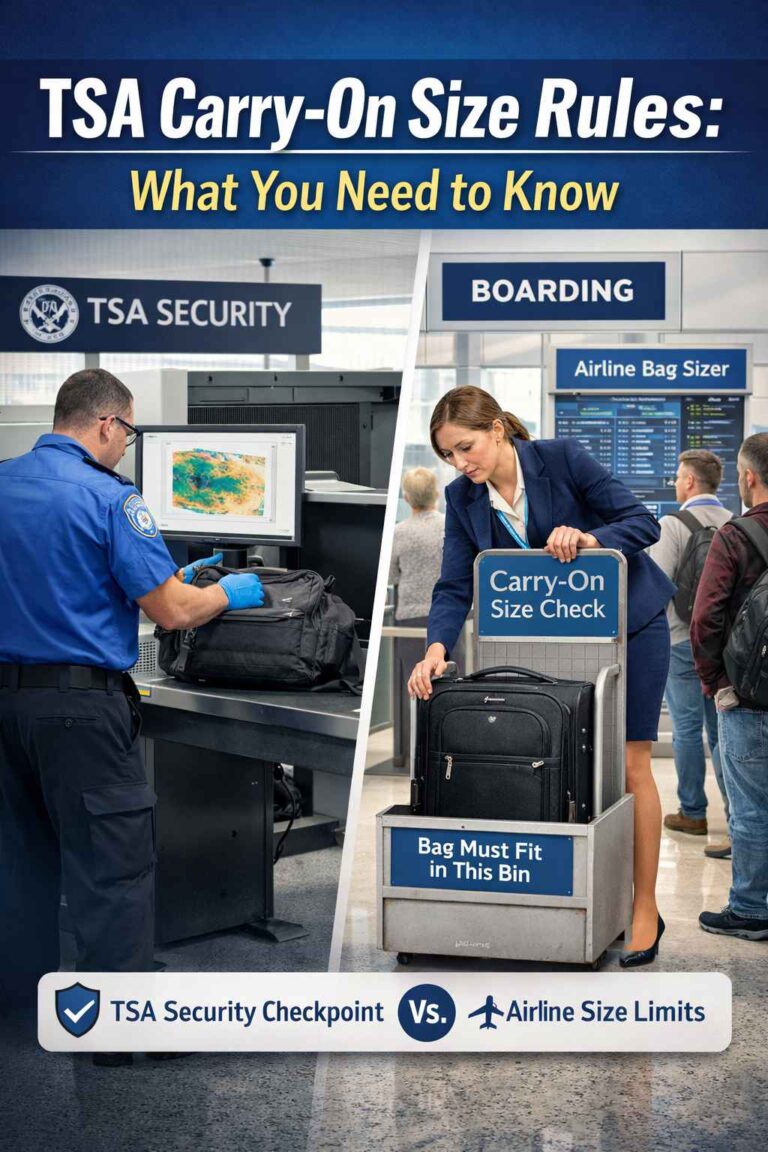
TSA Liquid Rules Explained
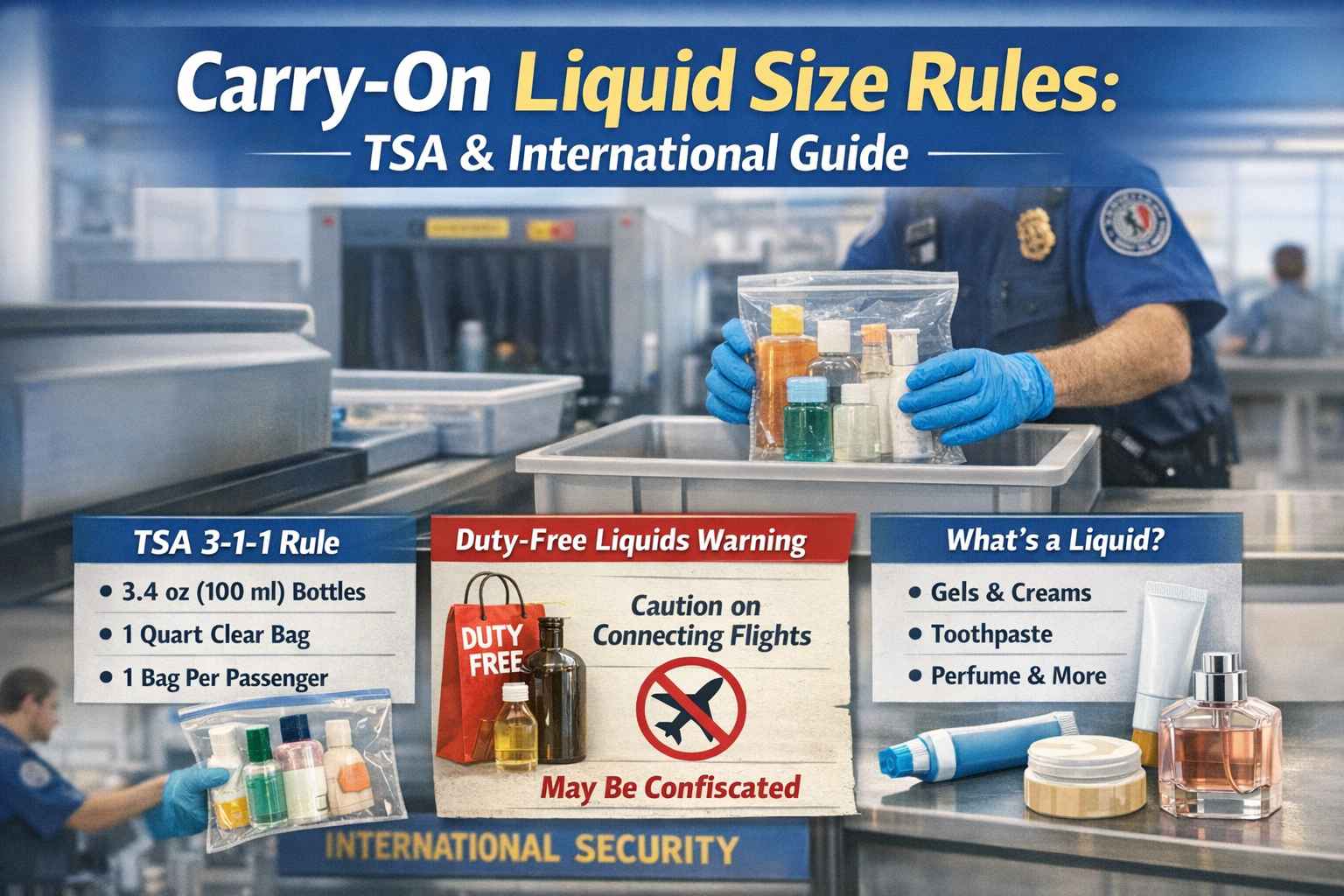
If you’re flying from or within the United States, the TSA follows the well-known 3-1-1 rule:
- 3.4 oz (100 ml) per container
- 1 quart-sized clear bag
- 1 bag per passenger
That means all your liquids must fit into a single transparent bag, and it should be easy to remove during screening.
What TSA actually checks:
- Liquids are separated from your main bag
- Containers are within size limits
- The bag is sealed and visible
Practical tip:
Keep your liquids bag near the top of your carry-on. You’ll be asked to take it out at security.
Real-world example:
A small toiletry kit with travel-size shampoo, toothpaste, and moisturizer works perfectly. A full-size shampoo bottle—even half empty—will be taken away.
International Liquid Rules
Most countries follow similar liquid rules to TSA, including Europe, Canada, and Asia.
However, enforcement can feel very different.
- In some countries, staff may visually inspect your bag without asking you to remove liquids
- In others, especially busy airports, they strictly require everything to be separated
Key difference:
The rule is the same, but how strictly it’s enforced changes.
For example:
- European airports often follow the same 100 ml rule but may be stricter about the bag size
- Asian airports sometimes check more carefully, especially for connecting flights
Tip:
Always assume the strictest version of the rule when traveling internationally.
Airline Carry-On Size Guides
- Delta carry-on size
- American baggage rules
- United carry-on allowance
- Southwest cabin luggage size
- Spirit carry-on policy
Duty-Free Liquids & Connecting Flights
This is where many travelers get caught off guard.
You buy a bottle of alcohol or perfume at duty-free, thinking it’s safe because it was purchased after security. That’s true for your first flight—but not always for your next one.
Here’s what happens:
If you have a connecting flight, especially in another country:
- You may go through security again
- Your duty-free liquids may not be allowed through
Even if they are sealed, they can still be confiscated if:
- You don’t have access to checked baggage
- You can’t repack them before rechecking
Real scenario:
A traveler buys a 500 ml perfume bottle in Dubai. It’s fine on the first flight. But during a layover in Europe, it gets confiscated at security because it exceeds 100 ml.
How to avoid this:
- Only buy duty-free liquids if your journey ends at that airport
- Or ensure you can pack them into checked baggage during connections
This one mistake costs travelers a lot of money.
Helpful Carry-On Guides
What Counts as Liquid?
Many people think liquids only mean drinks—but the rule is much broader.
Here’s what counts as liquid in carry-on baggage:
- Creams and lotions
- Gels (hair gel, face gel)
- Toothpaste
- Perfume
- Liquid makeup
- Deodorant (roll-on or gel type)
Even items like peanut butter or soft cheese can be treated as liquids in some cases.
Simple rule:
If it can spread, squeeze, or pour—it’s likely considered a liquid.
Common Mistakes Traveler’s Make
These are the exact reasons bags get flagged at security.
Bringing Full-Size Bottles
Even if partially used, large containers are not allowed.
Example:
A 200 ml sunscreen bottle with only 20 ml left will still be removed.
Not Using a Clear Bag
Liquids must be stored in a transparent, resealable bag.
Throwing them loose inside your suitcase often leads to delays.
Forgetting to Remove Liquids at Security
In many airports, you’re required to take your liquids out separately.
If you don’t:
- Your bag may be scanned again
- You’ll slow down the line
Packing Too Many Items
Even travel-size items must fit inside one clear bag.
Overpacking leads to items being removed.
Misunderstanding Duty-Free Rules
As explained earlier, duty-free liquids are not always safe during connections.
Traveler Insight
From experience, liquid rules aren’t applied the same way everywhere.
In U.S. airports, security staff usually follow a clear process. You take out your liquids, place them in a bin, and move forward.
In Europe, especially at busy hubs, staff can be stricter about bag size and container limits. If your liquids don’t fit properly in the clear bag, they may ask you to throw items away.
In parts of Asia, checks can be even more detailed. Bags are sometimes inspected manually, and anything questionable gets flagged quickly.
One thing many travelers notice is that connecting flights are where problems happen most. What passes at one airport might not pass at the next.
FAQs
What is the liquid limit for carry-on baggage?
The standard limit is 100 ml (3.4 oz) per container, and all liquids must fit in one clear bag.
Does TSA allow liquids in carry-on?
Yes, but only within the 3-1-1 rule: small containers, one clear bag, one per passenger.
Are liquid rules the same internationally?
Mostly yes, but enforcement can vary by country and airport.
Can I bring duty-free liquids on connecting flights?
Not always. If you pass through security again, they may be confiscated unless packed in checked baggage.
What items are considered liquids?
Gels, creams, toothpaste, perfumes, and similar items are all treated as liquids.
What happens if my liquid exceeds the limit?
It will likely be removed at security and cannot be taken onboard.
Knowing these rules ahead of time saves you from last-minute surprises at the airport. A little preparation goes a long way—especially when it comes to liquids in your carry-on.